


OH HELL NO some stupid mod closed the same sex marriage thread. And this is the response. Hello Everyone!
This has certainly been a volatile issue ever since marriage services were initially offered. It is wonderful to see that so many of you care a great deal about Vana'diel and there have been many constructive comments in this thread. Unfortunately, it does appear to have shifted from suggestions about the game's environment to real-world matters. As a result, the thread will be closed.
So um... yea the only good point one of the people brought up was the game is based from japan and japan doesnt do same sex sadly. *cast waterV on myself to put out my rage* I no I had a queen moment w/e
FFXI LGBT Community, Who Are You?

|
FFXI LGBT Community, who are you?
Leviathan.Tohihroyu said: I'm annoyed... my photobucket seems to have...broke, no images load, if I go to my album pictures don't load, any place I posted images its like I never posted anything not even a Broken image box shows up...I've cleared my cashe still no change. D: whats going on? I've googled but nothing there helped (clearing image cashe, turning off ad block) it did that after I put 2 new pictures in it ._. So many people where at one anothers throats in the topic though Silly question but did you accidentally block images from photobucket? Bismarck.Bloodbeat said: Bismarck.Cuelebra said: Bismarck.Bloodbeat said: Leviathan.Hohenheim said: Hi guys ;o I haven't posted in like 30 pages! I ate 1600 calories worth of candy just now. It's not helping me get into a hot, buff body. But it was so worth it. Though I feel kind of sick now :< Or how about you put your sweets into a giant block of ice. By the time you've worked through it with a pickaxe, you'll have burned them off. ;) Wouldnt work. diffusion would cause sugar molecules to move into the ice. lol so ud be eatting sugar while chewing through the ice Really? I wouldn't have thought sucrose would have much mobility at lower temperatures through solid ice. :P Well yes and no. If you can come up with a way to transport the candy directly into the ice block while its still frozen then yes. Sucrose diffusion rate would decrease because of temperature. Assuming u place in the candy into a mass of water and allow it to freeze over time is was what i was imagining. Additionally because of the polar charges of H20. Mobility via diffusion is not completely reduced to 0. H20 polar composition actually turns into a honey comb formation while frozen. allowing Van Der Walls to NOT be a factor in diffusion inhibition. Your text to link here... Bahamut.Weasel said:  im bored nothing to do. how u doing Weasel now that u cant play ffxi! Bismarck.Reyke said: OH HELL NO some stupid mod closed the same sex marriage thread. And this is the response. Hello Everyone! This has certainly been a volatile issue ever since marriage services were initially offered. It is wonderful to see that so many of you care a great deal about Vana'diel and there have been many constructive comments in this thread. Unfortunately, it does appear to have shifted from suggestions about the game's environment to real-world matters. As a result, the thread will be closed. So um... yea the only good point one of the people brought up was the game is based from japan and japan doesnt do same sex sadly. *cast waterV on myself to put out my rage* I no I had a queen moment w/e Phoenix.Kugata said: Merit Magazine vol.3 (203) March 2011 looking great :D!! Leviathan.Alkalinejoe said: Bismarck.Reyke said: OH HELL NO some stupid mod closed the same sex marriage thread. And this is the response. Hello Everyone! This has certainly been a volatile issue ever since marriage services were initially offered. It is wonderful to see that so many of you care a great deal about Vana'diel and there have been many constructive comments in this thread. Unfortunately, it does appear to have shifted from suggestions about the game's environment to real-world matters. As a result, the thread will be closed. So um... yea the only good point one of the people brought up was the game is based from japan and japan doesnt do same sex sadly. *cast waterV on myself to put out my rage* I no I had a queen moment w/e Theres always gonna be homophobic individuals and ignorant people. You cant really attempt to educate them either. So i usually just point and laugh lol Bismarck.Cuelebra said: Bahamut.Weasel said: im bored nothing to do. how u doing Weasel now that u cant play ffxi! Well, today's my first day off work in like 8 or 9 days (lost count). Right now I'm playing Pokemon Black (just started playing yesterday), making rice, and doing the dishes. I feel so domestic. Bahamut.Weasel said: Bismarck.Cuelebra said: Bahamut.Weasel said: im bored nothing to do. how u doing Weasel now that u cant play ffxi! Well, today's my first day off work in like 8 or 9 days (lost count). Right now I'm playing Pokemon Black (just started playing yesterday), making rice, and doing the dishes. I feel so domestic. I just had my protein shake now off to the gym. I think im going to loose all the gamer fat i gained from FFXI finally haha Bismarck.Cuelebra said: Bahamut.Weasel said: Bismarck.Cuelebra said: Bahamut.Weasel said: im bored nothing to do. how u doing Weasel now that u cant play ffxi! Well, today's my first day off work in like 8 or 9 days (lost count). Right now I'm playing Pokemon Black (just started playing yesterday), making rice, and doing the dishes. I feel so domestic. I just had my protein shake now off to the gym. I think im going to loose all the gamer fat i gained from FFXI finally haha /ma "Erase" GamerFat Bahamut.Weasel said: Bismarck.Cuelebra said: Bahamut.Weasel said: Bismarck.Cuelebra said: Bahamut.Weasel said: im bored nothing to do. how u doing Weasel now that u cant play ffxi! Well, today's my first day off work in like 8 or 9 days (lost count). Right now I'm playing Pokemon Black (just started playing yesterday), making rice, and doing the dishes. I feel so domestic. I just had my protein shake now off to the gym. I think im going to loose all the gamer fat i gained from FFXI finally haha /ma "Erase" GamerFat i dont think Erase works. its like Doom. with a counter on it. /item "Holy Water" <me> /wait 2 /item "Holy Water" <me> /wait 2 /item "Holy Water" <me> /p Gamer Fatna me hurry 3 seconds left!!! O.O
/ja Chainspell <me> /ma GamerFatna Cuelebra /ma GamerFatna Cuelebra /ma GamerFatna Cuelebra /ma GamerFatna Cuelebra /ma GamerFatna Cuelebra /ma GamerFatna Cuelebra /ma GamerFatna Cuelebra /ma GamerFatna Cuelebra /ma GamerFatna Cuelebra /ma GamerFatna Cuelebra /ma GamerFatna Cuelebra /ma GamerFatna Cuelebra /ma GamerFatna Cuelebra /ma GamerFatna Cuelebra /ma GamerFatna Cuelebra /ma GamerFatna Cuelebra /ma GamerFatna Cuelebra /ma GamerFatna Cuelebra /ma GamerFatna Cuelebra /ma GamerFatna Cuelebra /ma GamerFatna Cuelebra /ma GamerFatna Cuelebra /ma GamerFatna Cuelebra /ma GamerFatna Cuelebra /ma GamerFatna Cuelebra /ma GamerFatna Cuelebra /ma GamerFatna Cuelebra /ma GamerFatna Cuelebra /ma GamerFatna Cuelebra /ma GamerFatna Cuelebra /ma GamerFatna Cuelebra /ma GamerFatna Cuelebra /ma GamerFatna Cuelebra /ma GamerFatna Cuelebra /ma GamerFatna Cuelebra Had to post on page 808; it's my favorite number.
Bahamut.Weasel said: O.O /ja Chainspell <me> /ma GamerFatna Cuelebra /ma GamerFatna Cuelebra /ma GamerFatna Cuelebra /ma GamerFatna Cuelebra /ma GamerFatna Cuelebra /ma GamerFatna Cuelebra /ma GamerFatna Cuelebra /ma GamerFatna Cuelebra /ma GamerFatna Cuelebra /ma GamerFatna Cuelebra /ma GamerFatna Cuelebra /ma GamerFatna Cuelebra /ma GamerFatna Cuelebra /ma GamerFatna Cuelebra /ma GamerFatna Cuelebra /ma GamerFatna Cuelebra /ma GamerFatna Cuelebra /ma GamerFatna Cuelebra /ma GamerFatna Cuelebra /ma GamerFatna Cuelebra /ma GamerFatna Cuelebra /ma GamerFatna Cuelebra /ma GamerFatna Cuelebra /ma GamerFatna Cuelebra /ma GamerFatna Cuelebra /ma GamerFatna Cuelebra /ma GamerFatna Cuelebra /ma GamerFatna Cuelebra /ma GamerFatna Cuelebra /ma GamerFatna Cuelebra /ma GamerFatna Cuelebra /ma GamerFatna Cuelebra /ma GamerFatna Cuelebra /ma GamerFatna Cuelebra /ma GamerFatna Cuelebra i dont think rdm has acess to GamerFatna. i think thats SCH and WHM main only haha. /ja "Celerity" <me> /wait 2 /ma "GamerFatna" <me> /wait 2 /error unable to casts spells. Bismarck.Cuelebra said: Bismarck.Bloodbeat said: Bismarck.Cuelebra said: Bismarck.Bloodbeat said: Leviathan.Hohenheim said: Hi guys ;o I haven't posted in like 30 pages! I ate 1600 calories worth of candy just now. It's not helping me get into a hot, buff body. But it was so worth it. Though I feel kind of sick now :< Or how about you put your sweets into a giant block of ice. By the time you've worked through it with a pickaxe, you'll have burned them off. ;) Wouldnt work. diffusion would cause sugar molecules to move into the ice. lol so ud be eatting sugar while chewing through the ice Really? I wouldn't have thought sucrose would have much mobility at lower temperatures through solid ice. :P Well yes and no. If you can come up with a way to transport the candy directly into the ice block while its still frozen then yes. Sucrose diffusion rate would decrease because of temperature. Assuming u place in the candy into a mass of water and allow it to freeze over time is was what i was imagining. Additionally because of the polar charges of H20. Mobility via diffusion is not completely reduced to 0. H20 polar composition actually turns into a honey comb formation while frozen. allowing Van Der Walls to NOT be a factor in diffusion inhibition. Your text to link here... Assuming it wasn't hydrophobic. Try putting a skittle in ethanol and you'll see what I mean ;) This is way too biochemistry-esque for a joke. Lol Bismarck.Bloodbeat said: Bismarck.Cuelebra said: Bismarck.Bloodbeat said: Bismarck.Cuelebra said: Bismarck.Bloodbeat said: Leviathan.Hohenheim said: Hi guys ;o I haven't posted in like 30 pages! I ate 1600 calories worth of candy just now. It's not helping me get into a hot, buff body. But it was so worth it. Though I feel kind of sick now :< Or how about you put your sweets into a giant block of ice. By the time you've worked through it with a pickaxe, you'll have burned them off. ;) Wouldnt work. diffusion would cause sugar molecules to move into the ice. lol so ud be eatting sugar while chewing through the ice Really? I wouldn't have thought sucrose would have much mobility at lower temperatures through solid ice. :P Well yes and no. If you can come up with a way to transport the candy directly into the ice block while its still frozen then yes. Sucrose diffusion rate would decrease because of temperature. Assuming u place in the candy into a mass of water and allow it to freeze over time is was what i was imagining. Additionally because of the polar charges of H20. Mobility via diffusion is not completely reduced to 0. H20 polar composition actually turns into a honey comb formation while frozen. allowing Van Der Walls to NOT be a factor in diffusion inhibition. Your text to link here... Assuming it wasn't hydrophobic. Try putting a skittle in ethanol and you'll see what I mean ;) This is way too biochemistry-esque for a joke. Lol lol its neither. hydrophobicity isnt factor on most sugars usually particular because they are in a class of chemicals known as hydrocarbons. The greater the length of the CH3 chain the less overall charge it posesses. Hense why most hydrocarbons are liquids or gases at room temp. For the fact that their charge is nearly insignificant in ionic/polar charged systems. e.g. water. Ethanol when mixed with water is a completely different matter. as its not in the same class of hydrocarbons. Ethanol posses a hydroxyl substituent. The hydroxyl substituent does possesses a delta charge similar to that of water. however it again it is reduced by the overall length of the CH3 chain. Therefor in organic chemistry we uses this to represent the reaction between H20 and EtOh EtOH---OH2(l) + 2H20...(l) <-- ------->>EtOH(l) + 3H20... the extended arrow and length represents that equilibrium would automically favor ethanol as an near inert compound vers a polar compound of EthOH---OH2. Additionally, H20 polarity would not play a factor because of the fact that in solid state h20 molecules form a crystilline structure. the polar+ charge of the ...0-H-o-H-O-H... e.g. would always take precident because the delta charge of O- and the delta charge of H+ absolute values exceed the delta charge of the hydrocarbon in this case sucrose. 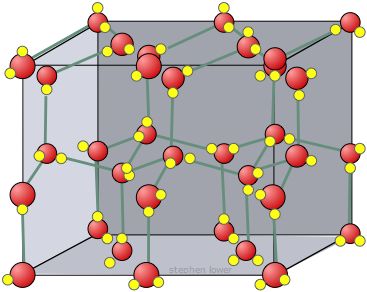 Leviathan.Tohihroyu said: OK guys...I'm so confused right now... one of the comments on my rl pics is well...confusing....halp? its on this one http://www.ffxiah.com/screenshots/55140 jesus dude how old are you like 9 Eh, people are just bored. Can dismiss it. :)
Gilgamesh.Hanbok said: Phoenix.Kugata said: Merit Magazine vol.3 (203) March 2011 looking great :D!! Leviathan.Tohihroyu said: OK guys...I'm so confused right now... one of the comments on my rl pics is well...confusing....halp? its on this one http://www.ffxiah.com/screenshots/55140 Omydeargod XD (i dont mean in baaaad mood) lol im sooo lucku Oumura was galka in real :))))))))))))))))))))) and yeeeeah guys first MORNING!!!! and second when did we ost our real life photos XD Hanboki want yours :D |


















All FFXIV and FFXI content and images © 2002-2026 SQUARE ENIX CO., LTD.
FINAL FANTASY is a registered trademark of Square Enix Co., Ltd.